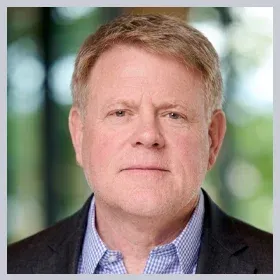
Guest

Stephen Kowal,
CTIO and Telecommunications Leader
"The Future Focused CXOs"
PODCAST - Episode 41
The Future Focused CXOs is the podcast for C-level executives aiming to scale their organizations, lead through transformative challenges, and stay ahead in adopting cutting-edge technologies like Artificial intelligence. Each episode explores actionable leadership strategies, insights on managing rapid organizational change, and real-world examples from top executives tackling the complexities of modern business operations.
In this episode of the Future Focused CXO Podcast, Steve Keck speaks with Stephen Kowal, CTIO and telecommunications leader, about his 25+ years of experience building, scaling, and transforming telecom operations across different countries. Drawing on his experiences in Croatia, Poland, Afghanistan, and Puerto Rico, Stephen shares how leaders can turn a bold technology vision into successful business transformation.
In this conversation, you'll learn:
- Turning Vision into Execution: How to translate a technology vision into a practical strategy that teams can deliver.
- Managing Stakeholders: How to navigate executive expectations, organizational politics, and vendor relationships while keeping transformation on track.
- Leading Across Cultures: Why listening, situational awareness, and understanding local decision-making styles matter when leading change.
- Balancing Technology and Business Priorities: How to make technology decisions that account for costs, operational needs, and customer experience.
- Simplifying Complex Transformations: How choosing the right execution strategy and vendor partnerships can reduce complexity and accelerate delivery.
- Applying AI in Telecommunications: Where AI can improve data analysis, product portfolio management, fraud detection, revenue assurance, and customer service.
Listen to Stephen's insights on leading complex transformations, aligning people around a shared vision, and preparing technology organizations for what's next.
Engage with our Latest Conversations Featuring Industry Experts!
.png)
The Future Focused CXO Episode 41: Show Notes
Leading Technology Transformation: Turning Vision into Execution
Technology transformation is often discussed in terms of platforms, infrastructure, and innovation. But successful transformation depends on something broader: the ability to align people, business priorities, and technology around a shared vision.
For technology leaders, having a clear vision is only the starting point. The real challenge is translating that vision into decisions, getting stakeholders aligned, navigating organizational resistance, and ensuring the strategy works in practice.
In this episode of the Future Focused CXO Podcast, Steve Keck speaks with Stephen Kowal, CTIO, who brings more than 25 years of experience building and transforming telecommunications operations across international markets.
Drawing on his leadership experiences in Poland, Croatia, Afghanistan, and Puerto Rico, Stephen shares practical lessons on leading complex transformations, managing competing priorities, and making technology decisions that deliver business value.
Here are the key insights from their conversation.
1. Why Does Technology Transformation Start with People?
One of Stephen's central lessons is that technology alone cannot transform an organization.
Throughout his career, he has worked with businesses at different stages of maturity, from launching telecom operations from scratch to transforming established companies with legacy systems and processes.
His experience in Croatia illustrates this clearly. The organization was moving from a government-controlled monopoly toward an open-market telecommunications business. The transformation involved more than replacing technology. It required changes to organizational structures, processes, customer interactions, and the way people worked.
The company had around 20 regional offices, each operating with its own billing platform. Customer service processes were largely manual, making it difficult to compete in an increasingly open market.
As part of a $65 million transformation program, Stephen helped centralize operations and establish three call centers. This required changing responsibilities, reducing operational duplication, and moving customer interactions from local offices to centralized service teams.
But changing systems and structures also meant changing familiar ways of working. Some employees resisted because existing processes supported informal arrangements that would no longer continue.
The leadership lesson: Technology transformation must account for the people and processes around it. Leaders need to understand how work gets done today, why people rely on existing systems, and what will change for them before introducing a new operating model.
2. How Can Technology Leaders Turn a Vision into Execution?
A technology vision provides direction, but execution determines whether that vision becomes reality.
Stephen shared an example from Poland, where he helped launch a mobile operator from the ground up. The organization had a 12-month deadline to launch its services while integrating an acquired company's product portfolio.
The project involved several interconnected components, including voicemail, SMS, data measurement platforms, and network systems.
One option was to select the best individual solution from different vendors. However, that would create additional integration work, more vendor relationships, and greater project management complexity.
Instead, Stephen chose a single vendor that could provide the complete portfolio.
The vendor had not previously delivered all the components together. Stephen negotiated an agreement: if the organization purchased the full portfolio, the vendor would take responsibility for making the components work together. The vendor would also address integration problems at its own cost.
During implementation, the team discovered that the voicemail systems handled prepaid and postpaid customers differently. The vendor modified its systems to support both use cases, without passing the additional cost to the organization.
The company successfully launched within the 12-month deadline.
This decision demonstrates an important distinction: the best individual technology products do not always create the best overall solution.
The leadership lesson: Build execution into the vision from the beginning. Evaluate technology choices based on business objectives, integration requirements, accountability, and delivery timelines—not just individual product capabilities.
3. How Should Leaders Manage Stakeholders During Complex Transformations?
Even a well-designed technology strategy can struggle when stakeholders have different priorities.
Stephen explained that technology leaders need to align people above, alongside, and below them. Executive teams, boards, vendors, and implementation teams may all have different expectations and influences on a project.
Sometimes decisions are shaped by vendor relationships or personal preferences rather than objective business requirements. These decisions can eventually create challenges for the teams responsible for implementation.
Stephen's approach is to understand the people involved before deciding how to handle a situation.
Some situations require a firm decision. Others require diplomacy, negotiation, and consensus-building. There is no single approach that works for every stakeholder.
He also emphasized the value of independent advice. When competing interests make a decision difficult, an independent third party can assess options against objective criteria. A structured RFP process can also help ensure fair competition and reduce internal conflict.
For leaders, this requires more than technical knowledge. It calls for emotional intelligence, preparation, and an understanding of organizational dynamics.
The leadership lesson: Stakeholder alignment is an ongoing leadership responsibility. Understand what matters to each group, establish objective decision criteria, and adapt your approach without losing sight of the transformation's goals.
4. Why Is Cultural Understanding Important in Technology Leadership?
Stephen's international experience taught him that the same leadership approach does not work in every organization or market.
In Croatia, he encountered a decision-making culture where major decisions required broad consensus. Even discontinuing a Telex service with only around 12 remaining accounts required approval from senior management.
The service was expensive to maintain relative to its usage, and Stephen believed the organization needed to move on. In that situation, he used his position to make the decision and break the deadlock.
In other situations, building consensus was more effective. He learned to work with smaller groups first, understand their concerns, and then bring stakeholders together around a decision.
He also highlighted the importance of distinguishing actual legal or regulatory requirements from what he called organizational "folklore." When people cited legal restrictions as a reason not to proceed, he sought confirmation from qualified legal or tax professionals rather than relying on assumptions.
His advice for navigating organizational dynamics comes from a lesson his mother shared with him: spend more time listening than talking, and read the room.
The leadership lesson: Understand the culture in which you are leading. Observe how decisions are made, listen to the people involved, verify assumptions, and choose an approach that helps the organization move forward.
5. How Can Technology Decisions Balance Business Needs and Customer Experience?
Technology leaders often face a choice between building something new and adapting what already exists. Stephen's experience in Poland and Puerto Rico showed why the right answer depends on the organization's circumstances.
In Poland, starting from a clean slate allowed the team to build a modern platform without carrying forward unnecessary legacy complexity. However, a new operation also meant developing capabilities and processes that an established business might already have.
Puerto Rico presented a different challenge. Following the acquisition of approximately 1.2 million AT&T mobile subscribers, the organization needed to integrate those customers into its network alongside its cable operations.
The existing technology environment could not support the additional requirements. Some legacy tools and processes also had to be replaced, but employees were familiar with the systems they had used for years.
Stephen emphasized that leaders must consider the functionality people need to do their jobs. Replacing a system without accounting for essential capabilities can create operational problems after launch.
Customer behavior also matters. Stephen shared how telecom stores in Jamaica could serve as community gathering places, not simply locations for technical support. While some customers may prefer apps and digital channels, others value face-to-face interactions.
A digital-first strategy should not assume every customer wants to interact with a business in the same way.
The leadership lesson: Technology decisions should reflect operational realities and customer expectations. Understand which capabilities must be preserved, where processes can improve, and how different customer groups prefer to interact with the business.
6. Where Can AI Make a Difference in Telecommunications?
Toward the end of the conversation, Stephen discussed how AI could help telecommunications companies manage complex data and improve operational decision-making.
He reflected on the effort involved in analyzing subscriber and product data during the Puerto Rico acquisition. The organization had large volumes of information to review, and preparing reports required significant time and effort.
AI could make this kind of work more efficient by helping teams query large datasets, identify patterns, explore scenarios, and produce insights more quickly.
Stephen also sees opportunities in managing complex product portfolios. Established telecom companies may have thousands of products and services in their systems. Understanding those portfolios, identifying duplication, and deciding what to simplify can be a major part of a transformation.
AI could help analyze product catalogs and highlight opportunities for simplification. However, deciding which products to retain remains a business decision that requires input from people who understand customer needs and commercial priorities.
Other potential applications include:
Fraud detection: Identifying unusual patterns and potential fraudulent activity.
Revenue assurance: Analyzing data to identify revenue leakage and discrepancies.
Service assurance: Supporting the monitoring and analysis of service performance.
Churn analysis: Helping teams identify patterns in customer behavior and improve retention decisions.
Real-time analytics: Making relevant operational insights easier to access and act on.
For Stephen, the opportunity lies in using AI to improve efficiency, generate better insights, and support stronger customer service.
The leadership lesson: Start with meaningful business problems. AI can help organizations analyze information and make decisions more effectively, but its value depends on how well it supports real operational and customer needs.
What Can CXOs Learn from Stephen's Approach to Technology Transformation?
Across more than two decades of international leadership, Stephen's experiences point to a consistent principle: successful transformation requires more than a strong technology strategy.
For CXOs and technology leaders, five lessons stand out:
Think beyond technology. Understand the people, processes, and organizational structures that determine whether a transformation will succeed.
Make execution part of the vision. Consider integration, accountability, resources, and timelines when evaluating technology choices.
Build stakeholder alignment. Understand competing interests and adapt your leadership approach to bring people together.
Keep business and customer needs central. A technically sound solution must also work for the organization and the people it serves.
Apply AI with a clear purpose. Focus on opportunities where AI can improve analysis, efficiency, decision-making, and customer experience.
A technology vision becomes meaningful when people understand it, the organization can execute it, and the results support business goals.
Stephen's journey offers a practical reminder for today's technology leaders: the ability to turn vision into execution is what makes transformation happen.
Watch the Full Conversation
Want to hear more about Stephen's experiences leading technology transformations across different countries and organizations?
Watch the full episode of the Future Focused CXO Podcast with Stephen Kowal and Steve Keck to explore the decisions, challenges, and leadership lessons behind his journey.
For more inspiring stories and actionable strategies from top executives, subscribe to the Future Focused CXOs podcast on your favorite streaming platform:
